On June 10, 2026, the Yanxiang Racing Team of Yanshan University and the Phoenix Racing Team of Coventry University, UK held an online “workshop” centered on formula racing car technology, covering professional topics such as racing car chassis, electrical systems, and aerodynamic body components, etc.
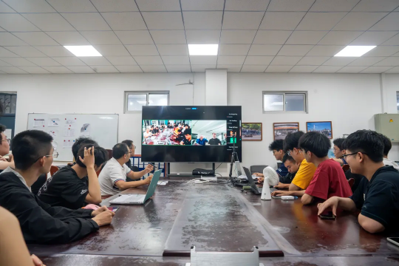
Phoenix Racing Team has achieved impressive results in FSUK (Formula Student United Kingdom)over the past three years: 5th overall in the UK in the 2023 season; in 2024, they innovated with a wingless race car, securing 7th place overall, 1st in the slalom, and 2nd in the sprint; in 2025, they upgraded to turbo-ethanol power and continued to optimize lightweight aerodynamic solutions, establishing themselves as a highly innovative veteran ICE(Internal Combust Engine) formula team in Europe.
Following the launch of this online workshop, Fu Guanqi, Team Leader of the Yanxiang Racing Team, and James, Team Leader of the Phoenix Racing Team, successively introduced their respective teams.
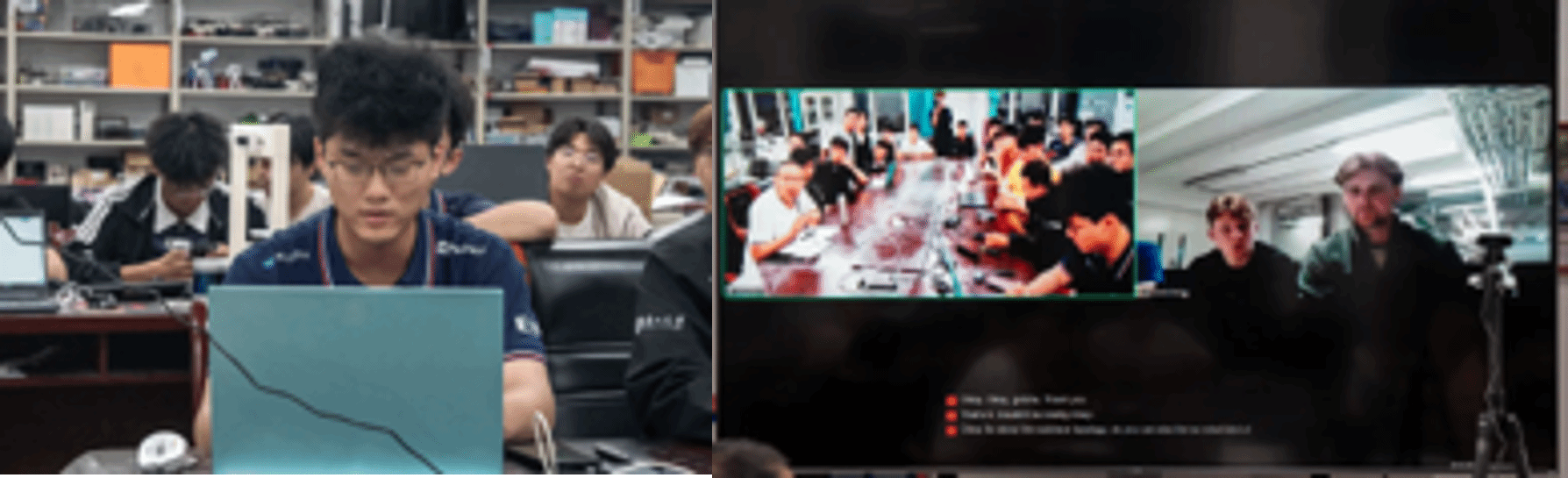
Team introduction from Team leaders
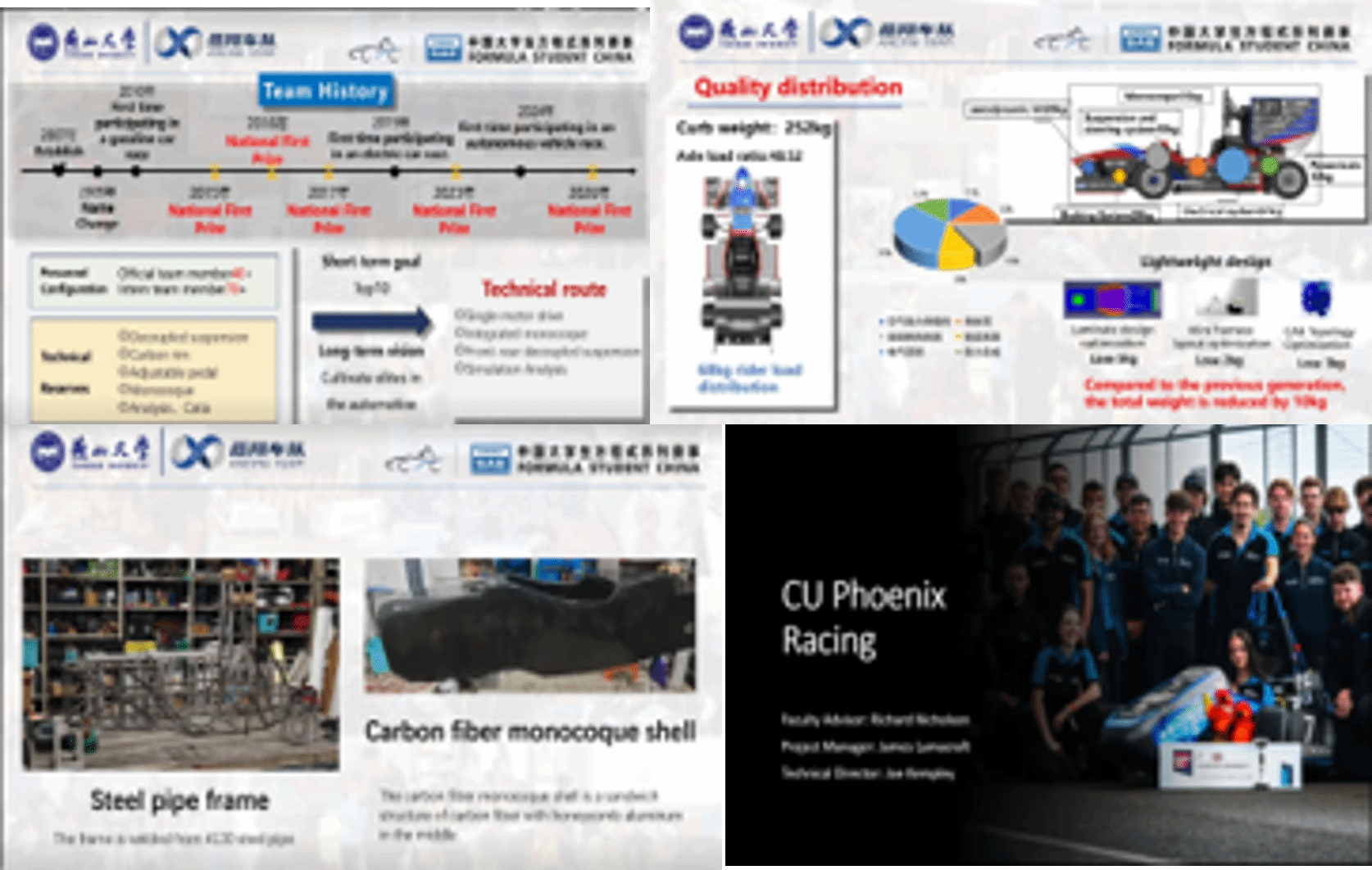
Yanxiang Racing Team Team Leader, Fu Guanqi reviewed the team's development history and race participation since its founding. During his presentation, he focused on the team's main YX-16 formula race car, providing a detailed explanation of the chassis architecture design, the electrical system layout, and revealing the actual key parameters of the fully assembled vehicle.
Subsequently, Coventry University Phoenix Racing Team Leader, James took over. He began by playing the team's promotional video, vividly showcasing the team's racing journey, and then meticulously dissected the core structures of their formula race car, including the chassis and aerodynamic components.
Following the two presentations, members from both teams gained a deeper understanding of each other's teams, laying a solid foundation for subsequent technical discussions.
Q&A section
After the team leaders completed their introductions, the online workshop moved into an interactive Q&A session. Team members from both sides, drawing on technical challenges encountered in the R&D and design of their formula race cars, posed questions and engaged in discussions, facilitating an efficient and pragmatic international technical exchange.
Based on their own R&D and practical experience, the Yanxiang Racing Team raised questions and held in-depth discussions with the Phoenix Racing Team on technical points such as low-voltage battery parameter configuration for the race car, practical application of vehicle dynamics, adaptation schemes for 81 hard-point combinations, prioritization of overall vehicle design goals, and the implementation of unmanned vision systems.
Similarly, the Phoenix Racing Team, drawing on their own R&D challenges and practical difficulties, focused on areas related to hardware manufacturing and processing techniques. They posed questions and discussed professional issues with the Yanxiang Racing Team, including PCB board design and fabrication for the car, selection of materials for the monocoque, and precision production and processing.
Faculty members Wang Zhong and Yang Yu from the Department of Vehicle Engineering were invited to visit Coventry University in the UK for academic exchange. Both teachers, who also serve as advisors to the Yanxiang Racing Team, have been continuously liaising and promoting international collaboration between the two university formula teams, deepening Sino-UK exchanges and cooperation in the field of university formula racing.
This transnational online workshop not only facilitated mutual learning of professional technologies between the two institutions but also deepened international collaboration in science and innovation. Through precise discussions on core technologies and practical challenges related to formula race car R&D, both teams leveraged each other's strengths, addressed weaknesses, and answered questions, effectively filling gaps in their respective knowledge of car design, hardware R&D, and process implementation. This event also built a bridge for long-term communication and collaborative progress between the two university teams, laying the groundwork for deeper technical exchanges and innovation cooperation in the future.